Case Study: 14 Oscars. Here's the Takeaway.
Updated: May 7
Context
On March 15, 2026 ABC Television broadcast the 98th Academy Awards show. The Oscars is easily considered the premier awards show within the entertainment industry, and is broadcast around the world. The 2026 telecast was my 14th show and it goes without saying that this is as high-profile event as they come. Working on this show requires a strong plan, thoughtful communication, and a great deal of attention to detail.
The Challenge
The Oscars telecast is more than a Hollywood event. It is a global spectacle that mirrors cultural values within the global entertainment industry. The show has thousands of people across a multitude of departments combining their talents to execute a flawless event. The pressure is immense with incredibly tight timelines, live event deliveries and an expectation that nothing can go wrong. The expectation is to deliver memorable images that tell the story of the event and these images must be accurately captioned with the correct talent, and made available as as close to live as technically possible. The best predictor of a successful event requires a strong well-thought-out plan, thoughtful communications, attention to detail, and each member of your team must perform at their highest level..
My Role
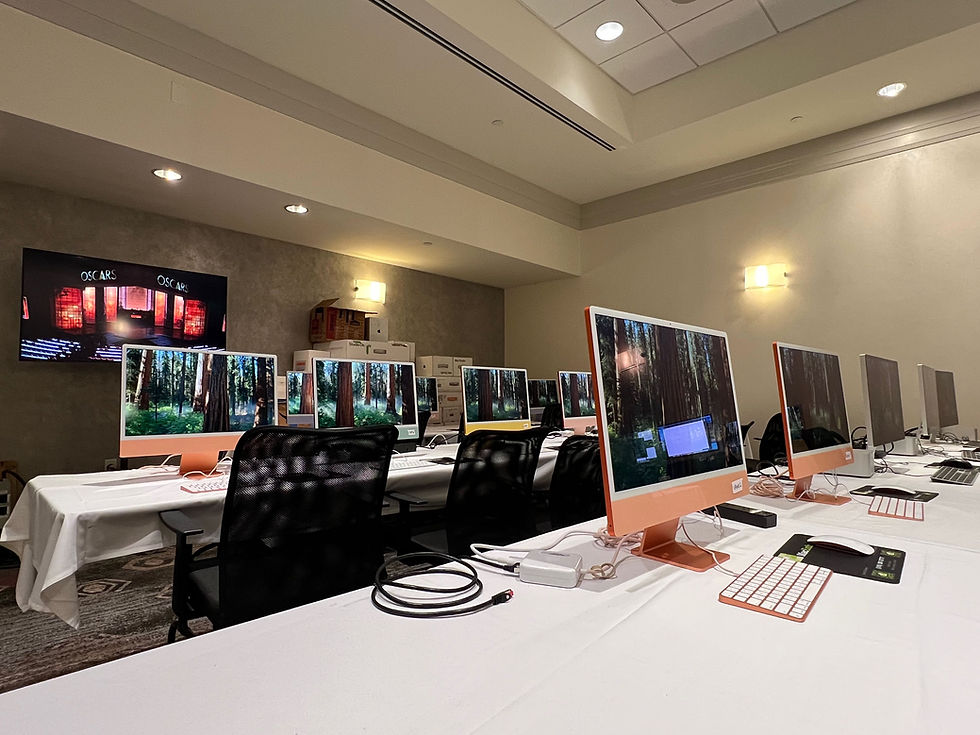
Over the course of 14 Oscars telecasts, my role has evolved into a hybrid photo producer / project manager. This requires me to participate in planning and logistics meetings, building out production calendars, establishing a working production office with the proper computer and software systems in place, working with site vendors to build a fast, secure network connection for the 20 to 30 production staff working from the office. On the day of the event, it is of the utmost importance to share the larger plan with everyone, ensure people are in the right locations, and confirm everything is working as expected.
The Approach
Since this event is so high-profile, a great deal of care is spent creating an operating plan covering logistics and smooth communications. A great deal of attention is given to assignments, with consideration given to each team member’s strengths and weaknesses to ensure they are set up for success and we achieve the larger goals of telling the story of the event in a timely manner. Furthermore, prior to the event all of the equipment is tested repeatedly to ensure there are no technology-related issues on the day of the event. A successful event also depends on a well-thought-out communication plan. I focus on providing as much information as possible in an easily digestible way, so each member of the team understands the larger goals and how their work fits into the plan.
Execution at Scale
For the 2026 Academy Awards telecast, the photo operations required coordination across multiple high-profile events, multiple teams, and delivery needs.
20 photographers assigned across all event coverage.
26 post-production support staff covering editing, captioning, processing, and delivery.
36+ distinct shoots leading up to Oscar Sunday event.
100,000+ images captured, edited, captioned, processed, and reviewed across the full cycle.
Nearly 11 hours of live event coverage on Oscars Sunday.
Roughly 12% to 15% of event images processed as final selects for live servicing.
Just under 10,000 images ultimately made available to press and select partners.
Outcome
The final delivery from 36 separate shoots included just under 10,000 images processed and provided for press and select partners. The distribution of images continued for several weeks after the event eventually tapering off. Each Oscars event creates opportunities for new operational learnings. Some improvements were practical, such as vendor contacts, software changes, staffing adjustments and a reassessment of photographer positioning. Others reinforced larger lessons, such as the fact that the best event outcomes come from early planning sessions, clear and concise communication, and a team that understands the larger goals.
Key Takeaways
The difference between chaos and controlled execution of a game plan is putting in the time on the front end. Review the previous year’s postmortem and use those learnings to shape the production and communication strategy. A strong production plan will reduce delivery times and remove a great deal of confusion during the event. Additionally, a strong communication plan allows your team members to feel confident and feel a sense of ownership in the larger stated goals. As technology advances, it is additive, but it doesn’t take the place of a disciplined approach to your workflows.
What This Means for Clients
The 98th Academy Awards was my 14th Oscars telecast. Across 36 shoots, 46 production staff, and nearly 11 hours of live coverage, the team delivered just under 10,000 final images to press and select partners — accurately captioned and on time. Results like that don't come from improvising on the day. They come from the work done weeks before anyone arrives on site.
The same approach that drives a successful Oscars production applies at any scale. TMS takes those same lessons; early planning, clear communication, and putting the right people in the right roles, and applies them to clients of all sizes. We start by listening to understand your specific needs and goals, then build a strategy and team to match. The goal is always the same: execute well on the day, and continue creating value beyond it.


Comments